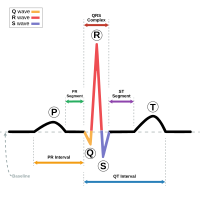
Photo from wikipedia
There are many cardiac arrhythmias and sudden cardiac death (SCD) related to channelopathies or ion channel disorders. Short QT syndrome (SQTS) is an inherited cardiac channelopathy principally caused by defective… Click to show full abstract
There are many cardiac arrhythmias and sudden cardiac death (SCD) related to channelopathies or ion channel disorders. Short QT syndrome (SQTS) is an inherited cardiac channelopathy principally caused by defective functioning of both potassium–calcium ion channel that lead to abnormal shortening of QT interval, and an increased risk of ventricular and atrial arrhythmias. Tall T waves in all lead electrocardiogram (ECG), peaked T waves, and narrow‐based T waves that are reminiscent of the typical “desert tent” T waves of hyperkalemia are frequently associated with SQTS. Diagnosis is based on patient's family history, evaluation of symptoms (palpitations and cardiac arrest), and 12‐lead ECG. It can be time challenging because of the wide range of QT interval in healthy subjects. Implantable cardioverter defibrillator (ICD) is the first‐line therapy in SQTS. Quinidine has the potential to be an effective pharmacological therapy for SQTS patients, especially in young children who are not feasible in ICD implantation, because of the ability to prolong QT interval.
Journal Title: Journal of Arrhythmia
Year Published: 2020
Link to full text (if available)
Share on Social Media: Sign Up to like & get
recommendations!