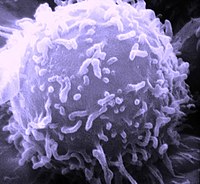
Photo from wikipedia
The world is witnessing a rapid demographic shift towards an older population, a trend with major medical, social, economic and political implications. Aging is a multifaceted process, involving numerous molecular… Click to show full abstract
The world is witnessing a rapid demographic shift towards an older population, a trend with major medical, social, economic and political implications. Aging is a multifaceted process, involving numerous molecular and cellular mechanisms in the context of different organ systems. A crucial component of aging is a set of functional and structural alterations in the immune system that can manifest as a decreased ability to fight infection, diminished response to vaccination, increased incidence of cancer, higher prevalence of autoimmunity and constitutive low-grade inflammation, among others. In addition to cell-intrinsic changes in both innate and adaptive immune cells, alterations in the stromal microenvironment in primary and secondary lymphoid organs play an important role in age-associated immune dysfunction. This article will provide a broad overview of these phenomena and point out some of their clinical and therapeutic implications.
Journal Title: Journal of immunological methods
Year Published: 2018
Link to full text (if available)
Share on Social Media: Sign Up to like & get
recommendations!