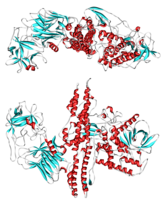
Photo from wikipedia
Dear Editor, Botulinum neurotoxin injection for the treatment of facial wrinkles is nowadays more popular than surgical intervention because the procedure is much easier and shows high patient satisfaction. Although… Click to show full abstract
Dear Editor, Botulinum neurotoxin injection for the treatment of facial wrinkles is nowadays more popular than surgical intervention because the procedure is much easier and shows high patient satisfaction. Although it is regarded as a safe procedure, it can cause some complications ranging from a mild headache, edema, erythema, pain, and bruising to intractable headaches, fatigue, flu-like symptoms, drug eruption, or ptosis. A 62-year-old female presented to our dermatology clinic with the complaint of skin rash since the day before. She had received botulinum toxin injection of an unlicensed brand for facial wrinkle correction 3 days before the development of the skin rash. There was a history of several botulinum toxin injections of an FDA-approved brand, the last one about 2 years ago, without any complication. On the physical examination, there were purpuric lesions in all botulinum toxin injection sites (Figure 1). Also, a non-pruritic maculopapular skin rash on her buttocks and extremities were detected (Figure 2). She was a known case of diabetes mellitus under control with metformin. She denied any new environmental contact or consumption of new medications. The routine investigations including complete blood count, platelet count, blood coagulation tests, plasma chemistry profile, liver function tests, serology for viral hepatitis and HIV, urine analysis, stool exam, and ANA, Anti-dsDNA, ANCA, C3, C4, and CH50 were all negative or within normal limits. Skin biopsy taken from her face and lower extremity revealed vascular proliferation along with superficial and deep perivascular neutrophilic and eosinophilic infiltration, as well as RBC extravasation compatible with the diagnosis of drug eruption with vasculopathic reaction pattern (Figure 3). Treatment with prednisolone and cetirizine was started and the skin rash started to disappear within 2 days. Almost all the extremity lesions were cleared after 1 week. Therefore, we gradually tapered the prednisolone dose. Facial purpuric lesions disappeared in the 1-month follow-up. Despite the complete remission of purpuric lesions, the patient reported the development of intermittent urticaria in sites of toxin injection; each episode lasting <24 h (Figure 4). Botulinum toxin injection for cosmetic purposes can cause some untoward outcomes. Most adverse effects following cosmetic use were lack of effect, injection site reaction, and ptosis. Unfortunately, some unlicensed and unapproved brands of botulinum toxin are
Journal Title: Dermatologic Therapy
Year Published: 2020
Link to full text (if available)
Share on Social Media: Sign Up to like & get
recommendations!