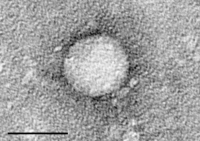
Photo from wikipedia
Late presentation for care in chronic viral hepatitis has been estimated to occur in approximately 25% of patients initiating treatment with direct acting antivirals. We evaluated the extent of late… Click to show full abstract
Late presentation for care in chronic viral hepatitis has been estimated to occur in approximately 25% of patients initiating treatment with direct acting antivirals. We evaluated the extent of late presentation since the implementation of direct acting antivirals and established differences between HCV monoinfected and HIV/HCV coinfected patients. The German Hepatitis C Registry is a multicenter non-interventional registry study. We analysed patients enrolled between 02/2014 and 12/2018. Advanced liver disease was defined as an aspartate aminotransferase to platelet-ratio-index score ≥ 1.5, a FibroScan ≥ 9.5 kPa or a METAVIR stage ≥ F3. HCV monoinfected and HIV/HCV coinfected patients were analysed separately and baseline characteristics of both subgroups were compared. 8003 treatment naive patients were analysed. Overall, 2197/8003 (28%) patients presented late for care (HCV monoinfection: 2067/7452 (28%); HIV/HCV coinfection: 130/551 (24%)). Late presentation decreased comparing the year 2014 to the years 2015 (p≤0.001), 2017 (p≤0.001) and 2018 (p≤0.001) and was significantly lower in 2018 in HIV/HCV coinfected patients compared to HCV monoinfected patients (HIV/HCV: 15/89 (17%) vs. 415/1566 (27%); p=0.047). We observed a significant decrease of late presentation from 2014 to 2018. Despite the decrease during the observation period, approximately one in four patients continued to be affected in 2018, with a lower proportion of late presentation being seen in patients coinfected with HIV/HCV. This trend might indicate effects of a closer linkage to care and a more frequent detection of acute HCV infections of HIV+ patients.
Journal Title: Journal of Viral Hepatitis
Year Published: 2021
Link to full text (if available)
Share on Social Media: Sign Up to like & get
recommendations!