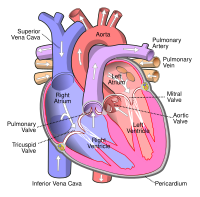
Acute aortic regurgitation underestimated by transesophageal echocardiography after preparatory balloon aortic valvuloplasty during transcatheter aortic valve implantation for severe aortic stenosis
Sign Up to like & getrecommendations! Published in 2021 at "Cardiovascular Intervention and Therapeutics"
DOI: 10.1007/s12928-021-00773-8
Abstract: An 86-year-old woman was referred to our hospital with severe symptomatic aortic stenosis (AS). Transthoracic echocardiography demonstrated a severely calcified tricuspid aortic valve with a peak/mean transvalvular pressure gradient of 70/40 mmHg and aortic valve… read more here.
Keywords: regurgitation; aortic valve; echocardiography; valve ... See more keywords

Translating pediatric primary care best practice guidelines for addressing tobacco in the WIC system.
Sign Up to like & getrecommendations! Published in 2022 at "Translational behavioral medicine"
DOI: 10.1093/tbm/ibac079
Abstract: Tobacco smoke exposure (TSE) adversely affects child health. Intervention research on reducing childhood TSE and uptake of evidence-based smoking cessation programs has had limited reach in high-risk communities. Intervening in clinics delivering the Special Supplemental… read more here.
Keywords: aar; staff; training; tobacco ... See more keywords
Prognostic worth of admission blood glucose to albumin ratio: evaluation in patients following percutaneous coronary intervention with and without type 2 diabetes mellitus.
Sign Up to like & getrecommendations! Published in 2025 at "BMC cardiovascular disorders"
DOI: 10.1186/s12872-025-05391-3
Abstract: Recently, a novel parameter named admission blood glucose to albumin ratio (AAR) has been proposed and proved to be significantly associated with adverse prognosis of acute myocardial infarction. The prognostic utility of AAR for risk… read more here.
Keywords: admission blood; macce; blood glucose; aar ... See more keywords
Retrospective assessment of at-risk myocardium in reperfused acute myocardial infarction patients using contrast‐enhanced balanced steady‐state free‐precession cardiovascular magnetic resonance at 3T with SPECT validation
Sign Up to like & getrecommendations! Published in 2021 at "Journal of Cardiovascular Magnetic Resonance"
DOI: 10.1186/s12968-021-00730-7
Abstract: Background Contrast-enhanced (CE) steady-state free precession (SSFP) CMR at 1.5T has been shown to be a valuable alternative to T2-based methods for the detection and quantifications of area-at-risk (AAR) in acute myocardial infarction (AMI) patients.… read more here.
Keywords: risk; validation; ssfp; contrast enhanced ... See more keywords
Mesoscale Modeling Study on Mechanical Deterioration of Alkali–Aggregate Reaction-Affected Concrete
Sign Up to like & getrecommendations! Published in 2022 at "Materials"
DOI: 10.3390/ma15113861
Abstract: The alkali–aggregate reaction (AAR) is a harmful chemical reaction that reduces the mechanical properties and weakens the durability of concrete. Different types of activated aggregates may result in various AAR modes, which affect the mechanical… read more here.
Keywords: aar; affected concrete; reaction; model ... See more keywords