
Role of PTP/PTK trans activated insulin-like signalling pathway in regulation of grasshopper (Oedaleus asiaticus) development
Sign Up to like & getrecommendations! Published in 2019 at "Environmental Science and Pollution Research"
DOI: 10.1007/s11356-019-04212-3
Abstract: Protein tyrosine phosphatase (PTPs) and protein tyrosine kinase (PTKs) genes are responsible for the regulation of insect insulin-like pathway (ILP), cells growth, metabolism initiation, gene transcription and observing immune response. Signal transduction in insect cell… read more here.
Keywords: protein; insulin; insulin like; oedaleus asiaticus ... See more keywords
Assessment of unconventional antimicrobial compounds for the control of ‘Candidatus Liberibacter asiaticus’, the causative agent of citrus greening disease
Sign Up to like & getrecommendations! Published in 2020 at "Scientific Reports"
DOI: 10.1038/s41598-020-62246-x
Abstract: In this study, newly identified small molecules were examined for efficacy against ‘Candidatus Liberibacter asiaticus’ in commercial groves of sweet orange (Citrus sinensis) and white grapefruit (Citrus paradisi) trees. We used benzbromarone and/or tolfenamic acid… read more here.
Keywords: assessment unconventional; treatment; asiaticus; candidatus liberibacter ... See more keywords
Galleria mellonella possesses the essential nutritional needs to host the fastidious Huanglongbing bacterial pathogen ‘Candidatus Liberibacter asiaticus’
Sign Up to like & getrecommendations! Published in 2025 at "Communications Biology"
DOI: 10.1038/s42003-025-08802-5
Abstract: Citrus greening disease, caused by ‘Candidatus Liberibacter asiaticus’, severely impacts citrus production worldwide. The development of sustainable control strategies for this disease is restricted by the unavailability of the bacterium in pure culture. Herein, the… read more here.
Keywords: nutritional needs; asiaticus; galleria mellonella; candidatus liberibacter ... See more keywords
The life cycle-dependent transcriptional profile of the obligate intracellular amoeba symbiont Amoebophilus asiaticus
Sign Up to like & getrecommendations! Published in 2022 at "FEMS Microbiology Ecology"
DOI: 10.1093/femsec/fiac001
Abstract: Abstract Free-living amoebae often harbor obligate intracellular bacterial symbionts. Amoebophilus (A.) asiaticus is a representative of a lineage of amoeba symbionts in the phylum Bacteroidota. Here, we analyse the transcriptome of A. asiaticus strain 5a2… read more here.
Keywords: cycle; asiaticus; life cycle; amoeba ... See more keywords
First report of Ranunculus mild mosaic virus in Ranunculus asiaticus in Korea.
Sign Up to like & getrecommendations! Published in 2022 at "Plant disease"
DOI: 10.1094/pdis-01-22-0238-pdn
Abstract: Ranunculus (Ranunculus asiaticus L.) is a popular ornamental plant mainly cultivated for cut flowers and flowering potted plants. In January 2021, a leaf sample of R. asiaticus that showed virus-like symptoms including mosaic, yellowing and… read more here.
Keywords: ranunculus; asiaticus; ranunculus mild; mild mosaic ... See more keywords
First Report of Xanthomonas campestris Causing Leaf Blight on Ranunculus asiaticus in Shanghai, China
Sign Up to like & getrecommendations! Published in 2025 at "Plant Disease"
DOI: 10.1094/pdis-04-25-0929-pdn
Abstract: Ranunculus asiaticus L., a species widely cultivated for its ornamental value, has emerged as an economically significant crop for Shanghai floriculture industry. In February 2025, severe leaf blight symptoms were observed affecting approximately 50% (15,000/30,000)… read more here.
Keywords: asiaticus; leaf blight; campestris; gene ... See more keywords
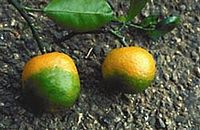
Genome Resource for the Huanglongbing Causal Agent 'Candidatus Liberibacter asiaticus' Strain AHCA17 from Citrus Root Tissue in California, USA.
Sign Up to like & getrecommendations! Published in 2020 at "Plant disease"
DOI: 10.1094/pdis-08-19-1735-a
Abstract: 'Candidatus Liberibacter asiaticus' is the unculturable causative agent of citrus huanglongbing disease. Here, we report the first citrus root metagenome sequence containing the draft genome of 'Ca. L. asiaticus' strain AHCA17, obtained from a pummelo… read more here.
Keywords: asiaticus strain; strain ahca17; asiaticus; candidatus liberibacter ... See more keywords
The impact of Diaphorina citri vectored Candidatus Liberibacter asiaticus on citrus metabolism.
Sign Up to like & getrecommendations! Published in 2021 at "Phytopathology"
DOI: 10.1094/phyto-06-21-0240-fi
Abstract: 'Candidatus' Liberibacter asiaticus is associated with the devastating citrus disease Huanglongbing. It is transmitted by grafting infected material to healthy plants and by the feeding of the Asian citrus psyllid (Diaphorina citri). Previously, we demonstrated… read more here.
Keywords: asiaticus; citrus; liberibacter asiaticus; candidatus liberibacter ... See more keywords
Controlled replication of ‘Candidatus Liberibacter asiaticus‘ DNA in citrus leaf discs
Sign Up to like & getrecommendations! Published in 2020 at "Microbial Biotechnology"
DOI: 10.1111/1751-7915.13531
Abstract: ‘Candidatus Liberibacter asiaticus’ is a fastidious bacterium and a putative agent of citrus greening disease (a.k.a., huanglongbing, HLB), a significant agricultural disease that affects citrus fruit quality and tree health. In citrus, ‘Ca. L. asiaticus’… read more here.
Keywords: asiaticus dna; asiaticus; candidatus liberibacter; citrus ... See more keywords
Pathogenicity and Transcriptomic Analyses of Two “Candidatus Liberibacter asiaticus” Strains Harboring Different Types of Phages
Sign Up to like & getrecommendations! Published in 2023 at "Microbiology Spectrum"
DOI: 10.1128/spectrum.00754-23
Abstract: Citrus Huanglongbing (HLB), also called citrus greening disease, is a highly destructive disease threatening citrus production worldwide. “Candidatus Liberibacter asiaticus” is one of the most common putative causal agents of HLB. Phages of “Ca. Liberibacter… read more here.
Keywords: asiaticus; liberibacter asiaticus; asiaticus strains; citrus ... See more keywords
Purification and partial characterization of LdtP, a cell envelope modifying enzyme in Liberibacter asiaticus
Sign Up to like & getrecommendations! Published in 2018 at "BMC Microbiology"
DOI: 10.1186/s12866-018-1348-8
Abstract: BackgroundThe aggressive spread of Liberibacter asiaticus, a bacterium closely associated with citrus greening, has given rise to an acute crisis in the citrus industry, making it imperative to expand the scientific knowledge base regarding L.… read more here.
Keywords: asiaticus; ldtp; liberibacter asiaticus; purification partial ... See more keywords