
Capillary rarefaction during bed rest is proportionally less than fibre atrophy and loss of oxidative capacity
Sign Up to like & getrecommendations! Published in 2022 at "Journal of Cachexia, Sarcopenia and Muscle"
DOI: 10.1002/jcsm.13072
Abstract: Muscle disuse from bed rest or spaceflight results in losses in muscle mass, strength and oxidative capacity. Capillary rarefaction may contribute to muscle atrophy and the reduction in oxidative capacity during bed rest. Artificial gravity… read more here.
Keywords: oxidative capacity; capillary rarefaction; bed rest; atrophy ... See more keywords
Plasma proteome profiling of healthy subjects undergoing bed rest reveals unloading‐dependent changes linked to muscle atrophy
Sign Up to like & getrecommendations! Published in 2022 at "Journal of Cachexia, Sarcopenia and Muscle"
DOI: 10.1002/jcsm.13146
Abstract: Inactivity and unloading induce skeletal muscle atrophy, loss of strength and detrimental metabolic effects. Bed rest is a model to study the impact of inactivity on the musculoskeletal system. It not only provides information for… read more here.
Keywords: plasma proteome; muscle; muscle atrophy; bed rest ... See more keywords
Bed rest and resistive vibration exercise unveil novel links between skeletal muscle mitochondrial function and insulin resistance
Sign Up to like & getrecommendations! Published in 2017 at "Diabetologia"
DOI: 10.1007/s00125-017-4298-z
Abstract: Aims/hypothesisPhysical inactivity has broad implications for human disease including insulin resistance, sarcopenia and obesity. The present study tested the hypothesis that (1) impaired mitochondrial respiration is linked with blunted insulin sensitivity and loss of muscle… read more here.
Keywords: con; insulin resistance; respiration; bed rest ... See more keywords

Time-series analysis of heart rate and blood pressure in response to changes in work rate before and after 60 days of 6° head down tilt bed rest
Sign Up to like & getrecommendations! Published in 2020 at "European Journal of Applied Physiology"
DOI: 10.1007/s00421-020-04576-2
Abstract: Purpose Cardiovascular regulation during exercise, described using time series analysis, is expected to be attenuated after bed rest (BR) and this effect will be dampened by a reactive jumps countermeasure. Methods Twenty subjects (29 ± 6 years,… read more here.
Keywords: work rate; time series; bed rest; group ... See more keywords
International standard measures during the VaPER bed rest study
Sign Up to like & getrecommendations! Published in 2021 at "Acta Astronautica"
DOI: 10.1016/j.actaastro.2021.10.017
Abstract: Abstract In 2017, the study, Vision Impairment and Intracranial Pressure and Psychological Envihab Research, dubbed VaPER, was conducted in the:envihab facility in Cologne, Germany to determine whether 30 days of bed rest at 6° head… read more here.
Keywords: standard measures; international standard; study; bed rest ... See more keywords
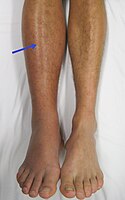
Risk factors associated with deep venous thrombosis in patients with different bed-rest durations: A multi-institutional case-control study.
Sign Up to like & getrecommendations! Published in 2020 at "International journal of nursing studies"
DOI: 10.1016/j.ijnurstu.2020.103825
Abstract: BACKGROUND Deep vein thrombosis represents a threat to public health and a heavy economic burden to society, and often occurs as a complication or cause of death in bedridden patients. How to prevent deep vein… read more here.
Keywords: deep vein; bed rest; rest durations; vein thrombosis ... See more keywords
Sixty days of head-down tilt bed rest with or without artificial gravity do not affect the neuromuscular secretome.
Sign Up to like & getrecommendations! Published in 2020 at "Experimental cell research"
DOI: 10.1016/j.yexcr.2020.112463
Abstract: Artificial gravity is a potential countermeasure to attenuate effects of weightlessness during long-term spaceflight, including losses of muscle mass and function, possibly to some extent attributable to disturbed neuromuscular interaction. The 60-day AGBRESA bed-rest study… read more here.
Keywords: rest without; head tilt; artificial gravity; bed rest ... See more keywords
A comparison of exercise interventions from bed rest studies for the prevention of musculoskeletal loss
Sign Up to like & getrecommendations! Published in 2019 at "NPJ Microgravity"
DOI: 10.1038/s41526-019-0073-4
Abstract: Musculoskeletal loss in actual or simulated microgravity occurs at a high rate. Bed rest studies are a reliable ground-based spaceflight analogue that allow for direct comparison of intervention and control participants. The aim of this… read more here.
Keywords: bed rest; muscle; rest studies; musculoskeletal loss ... See more keywords
Quantitative ultrasound image assessment of the optic nerve subarachnoid space during 90-day head-down tilt bed rest
Sign Up to like & getrecommendations! Published in 2024 at "NPJ Microgravity"
DOI: 10.1038/s41526-024-00347-x
Abstract: The elevation in the optic nerve sheath (ONS) pressure (ONSP) due to microgravity-induced headward fluid shift is the primary hypothesized contributor to SANS. This longitudinal study aims to quantify the axial plane of the optic… read more here.
Keywords: subarachnoid space; nerve; nerve subarachnoid; bed rest ... See more keywords
Systematic review of the effectiveness of standalone passive countermeasures on microgravity-induced physiologic deconditioning
Sign Up to like & getrecommendations! Published in 2024 at "NPJ Microgravity"
DOI: 10.1038/s41526-024-00389-1
Abstract: A systematic review of literature was conducted to evaluate the effectiveness of passive countermeasures in ameliorating the cardiopulmonary and musculoskeletal effects of gravitational unloading on humans during spaceflight. This systematic review is the third of… read more here.
Keywords: review; systematic review; bed rest; effectiveness ... See more keywords
Heterogeneous and lateralized cervical vascular responses to a 7-day head-down tilt bed rest
Sign Up to like & getrecommendations! Published in 2025 at "NPJ Microgravity"
DOI: 10.1038/s41526-025-00524-6
Abstract: This study aimed to investigate cervical vessel hemodynamics during 7 days of −6° head-down tilt (HDT) bed rest (BR) and 5 days of recovery in 40 healthy males, focusing on bilateral analysis and dynamic temporal… read more here.
Keywords: heterogeneous lateralized; cervical vascular; vascular responses; lateralized cervical ... See more keywords