
Agnostus pisiformis — a half a billion-year old pea-shaped enigma
Sign Up to like & getrecommendations! Published in 2017 at "Earth-Science Reviews"
DOI: 10.1016/j.earscirev.2017.08.004
Abstract: The Cambrian arthropod Agnostus pisiformis (Wahlenberg, 1818) is not only a beautiful fossil animal, approximately 1 cm in length when adult, but also an extinct species unusually well-known from its ‘soft’ ventral cuticular structures. It… read more here.
Keywords: pisiformis half; old pea; half billion; billion year ... See more keywords

A billion-year shift in the formation of Earth’s largest ore deposits
Sign Up to like & getrecommendations! Published in 2024 at "Proceedings of the National Academy of Sciences of the United States of America"
DOI: 10.1073/pnas.2405741121
Abstract: Significance The Earth’s largest and most economically significant iron deposits (Pilbara Craton, Western Australia) have been directly dated, revealing that they are up to a billion years younger than previously estimated. They also appear to… read more here.
Keywords: year shift; shift formation; earth largest; billion year ... See more keywords
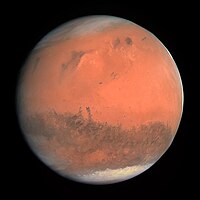
Four-billion year stability of the Earth–Mars belt
Sign Up to like & getrecommendations! Published in 2020 at "Monthly Notices of the Royal Astronomical Society"
DOI: 10.1093/mnras/staa3076
Abstract: Previous work has demonstrated orbital stability for 100 Myr of initially near-circular and coplanar small bodies in a region termed the 'Earth-Mars belt' from 1.08 au $< a read more here.
Keywords: mars belt; four billion; billion year; stability ... See more keywords
A 2–3 billion year old major merger paradigm for the Andromeda galaxy and its outskirts
Sign Up to like & getrecommendations! Published in 2018 at "Monthly Notices of the Royal Astronomical Society"
DOI: 10.1093/mnras/stx3343
Abstract: Recent observations of our neighbouring galaxy M31 have revealed that its disk was shaped by widespread events. The evidence for this includes the high dispersion ($V/\sigma$ $\le$ 3) of stars older than 2 Gyr, and… read more here.
Keywords: galaxy; merger; major merger; billion year ... See more keywords
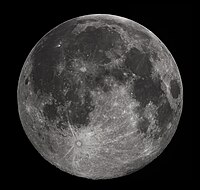
A two-billion-year history for the lunar dynamo
Sign Up to like & getrecommendations! Published in 2017 at "Science Advances"
DOI: 10.1126/sciadv.1700207
Abstract: Paleomagnetic evidence suggests the lunar dynamo persisted beyond 2.5 Ga, requiring an exceptionally long-lived power source. Magnetic studies of lunar rocks indicate that the Moon generated a core dynamo with surface field intensities of ~20… read more here.
Keywords: dynamo; billion year; history; two billion ... See more keywords
Two-billion-year-old evaporites capture Earth’s great oxidation
Sign Up to like & getrecommendations! Published in 2018 at "Science"
DOI: 10.1126/science.aar2687
Abstract: A strongly oxidizing Paleoproterozoic era Two billion years ago, marine sulfate concentrations were around one-third as high as modern ones, constituting an oxidizing capacity equivalent to more than 20% of that of the modern ocean-atmosphere… read more here.
Keywords: year old; great oxidation; billion year; earth ... See more keywords
A one-billion-year-old Scottish meteorite impact
Sign Up to like & getrecommendations! Published in 2025 at "Geology"
DOI: 10.1130/g53121.1
Abstract: The Stoer Group in northwest Scotland is one of the oldest well-preserved sedimentary successions in Europe and includes the Stac Fada Member, an impact ejecta deposit. Here we report U-Pb analyses on shocked zircon grains… read more here.
Keywords: age; stac fada; one billion; billion year ... See more keywords