
Large‐scale assessment of genetic structure to assess risk of populations of a large herbivore to disease
Sign Up to like & getrecommendations! Published in 2024 at "Ecology and Evolution"
DOI: 10.1002/ece3.11347
Abstract: Abstract Chronic wasting disease (CWD) can spread among cervids by direct and indirect transmission, the former being more likely in emerging areas. Identifying subpopulations allows the delineation of focal areas to target for intervention. We… read more here.
Keywords: disease; deer; spatial bca; genetic structure ... See more keywords
Breeding behavior of female white‐tailed deer relative to conception: Evidence for female mate choice
Sign Up to like & getrecommendations! Published in 2017 at "Ecology and Evolution"
DOI: 10.1002/ece3.2845
Abstract: Abstract Female white‐tailed deer (Odocoileus virginianus) are thought to choose between two behavioral strategies to maximize the quality of potential mates: sit and wait, characterized by concentrating activity within a restricted area, and excursive behavior,… read more here.
Keywords: deer; conception; white tailed; tailed deer ... See more keywords
Spatial and Temporal Relationships Between Roe and Red Deer in an Alpine Area
Sign Up to like & getrecommendations! Published in 2025 at "Ecology and Evolution"
DOI: 10.1002/ece3.70777
Abstract: ABSTRACT Interspecific interactions are important drivers of population dynamics and species distribution. These relationships can increase niche partitioning between sympatric species, which can differentiate space and time use or modify their feeding strategies. Roe deer… read more here.
Keywords: red deer; roe deer; area spatial; deer ... See more keywords
Risky movements? Natal dispersal does not decrease survival of a large herbivore
Sign Up to like & getrecommendations! Published in 2021 at "Ecology and Evolution"
DOI: 10.1002/ece3.7227
Abstract: Abstract Natal dispersal is assumed to be a particularly risky movement behavior as individuals transfer, often long distances, from birth site to site of potential first reproduction. Though, because this behavior persists in populations, it… read more here.
Keywords: deer; natal dispersal; dispersal; mortality ... See more keywords
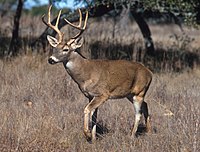
Addressing regional relationships between white‐tailed deer densities and land classes
Sign Up to like & getrecommendations! Published in 2021 at "Ecology and Evolution"
DOI: 10.1002/ece3.8084
Abstract: Abstract White‐tailed deer (Odocoileus virginianus) populations have recovered to about 30 million animals in the United States, but land cover has changed during the interval of recovery. To address the relationship between deer densities and… read more here.
Keywords: deer; white tailed; woody wetlands; tailed deer ... See more keywords
A genotyping‐in‐thousands by sequencing panel to inform invasive deer management using noninvasive fecal and hair samples
Sign Up to like & getrecommendations! Published in 2022 at "Ecology and Evolution"
DOI: 10.1002/ece3.8993
Abstract: Abstract Studies in ecology, evolution, and conservation often rely on noninvasive samples, making it challenging to generate large amounts of high‐quality genetic data for many elusive and at‐risk species. We developed and optimized a Genotyping‐in‐Thousands… read more here.
Keywords: ecology; deer; quality; panel ... See more keywords
White‐tailed deer exploit temporal refuge from multi‐predator and human risks on roads
Sign Up to like & getrecommendations! Published in 2022 at "Ecology and Evolution"
DOI: 10.1002/ece3.9125
Abstract: Abstract Although most prey have multiple predator species, few studies have quantified how prey respond to the temporal niches of multiple predators which pose different levels of danger. For example, intraspecific variation in diel activity… read more here.
Keywords: deer; white tailed; tailed deer; predator ... See more keywords
Spatiotemporal patterns of male and female white‐tailed deer on a hunted landscape
Sign Up to like & getrecommendations! Published in 2022 at "Ecology and Evolution"
DOI: 10.1002/ece3.9277
Abstract: Abstract Resource selection in sexually dimorphic ungulates is at least partially explained by sex‐specific resource requirements and risk aversion strategies. Females generally spend more time in areas with less risk and abundant, high‐quality forage due… read more here.
Keywords: deer; white tailed; tailed deer; male female ... See more keywords
Variation in adult and pup wolf diets at natal den sites is influenced by forest composition and configuration
Sign Up to like & getrecommendations! Published in 2023 at "Ecology and Evolution"
DOI: 10.1002/ece3.9648
Abstract: Abstract Although wolves are wide‐ranging generalist carnivores throughout their life cycle, during the pup‐rearing season wolf activity is focused on natal den sites where pup survival depends upon pack members provisioning food. Because prey availability… read more here.
Keywords: pup; deer; wolf; den sites ... See more keywords
Density‐habitat relationships of white‐tailed deer (Odocoileus virginianus) in Finland
Sign Up to like & getrecommendations! Published in 2022 at "Ecology and Evolution"
DOI: 10.1002/ece3.9711
Abstract: Abstract In heterogeneous landscapes, resource selection constitutes a crucial link between landscape and population‐level processes such as density. We conducted a non‐invasive genetic study of white‐tailed deer in southern Finland in 2016 and 2017 using… read more here.
Keywords: density; deer; finland; white tailed ... See more keywords
Dynamic riskscapes for prey: disentangling the impact of human and cougar presence on deer behavior using GPS smartphone locations
Sign Up to like & getrecommendations! Published in 2025 at "Ecography"
DOI: 10.1002/ecog.07626
Abstract: Prey species adjust their behavior along human‐use gradients by balancing risks from predators and humans. During hunting seasons, prey often exhibit strong antipredator responses to humans but may develop tolerance in suburban areas to exploit… read more here.
Keywords: risk; deer; deer behavior; cougar ... See more keywords