
Decreased Hip, Lower Leg, and Humeral Fractures but Increased Forearm Fractures in Highly Active Individuals
Sign Up to like & getrecommendations! Published in 2018 at "Journal of Bone and Mineral Research"
DOI: 10.1002/jbmr.3476
Abstract: It is not known how physical exercise affects the risk of different types of fractures, especially in highly active individuals. To investigate this association, we studied a cohort of 118,204 men and 71,757 women who… read more here.
Keywords: risk; hip; lower leg; highly active ... See more keywords
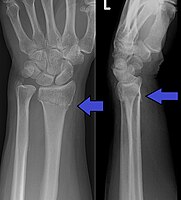
Treatment of nonunion after forearm fractures in children: a conservative approach
Sign Up to like & getrecommendations! Published in 2021 at "European Journal of Trauma and Emergency Surgery"
DOI: 10.1007/s00068-020-01583-y
Abstract: Nonunions are a very rare complication after surgical treatment of displaced forearm fractures in children, but can occur in both the radius or ulna. The aim of this study is to evaluate predisposing factors for… read more here.
Keywords: nonunion forearm; fractures children; treatment; forearm fractures ... See more keywords
Treatment of unstable forearm fractures at the metaphyseal-diaphyseal junction in children: antegrade ESIN vs. transepiphyseal intramedullary K-wire fixation
Sign Up to like & getrecommendations! Published in 2024 at "European Journal of Trauma and Emergency Surgery"
DOI: 10.1007/s00068-024-02562-3
Abstract: Treatment of unstable forearm fractures in the metaphyseal-diaphyseal junction (MDJ) zone is still a matter of debate. Major drawbacks of all types of fixations include either invasiveness, technical impracticality, or lack of acceptance by patients.… read more here.
Keywords: antegrade esin; forearm; treatment unstable; esin ... See more keywords
Epidemiology and treatment of forearm fractures in Swedish children and adolescents
Sign Up to like & getrecommendations! Published in 2025 at "European Journal of Trauma and Emergency Surgery"
DOI: 10.1007/s00068-025-02986-5
Abstract: Previous studies, mainly single-center, on pediatric forearm fractures have shown that boys sustain fractures more frequently than girls. The most common injury mechanisms are falls and fractures occur more frequently during the summer. Most pediatric… read more here.
Keywords: epidemiology; age; fracture; forearm ... See more keywords
Forearm Fractures in Overweight-Obese Children and Adolescents: A Matter of Bone Density, Bone Geometry or Body Composition?
Sign Up to like & getrecommendations! Published in 2022 at "Calcified tissue international"
DOI: 10.1007/s00223-022-00971-3
Abstract: Forearm fractures in children and adolescents are associated with increased body mass index (BMI). This bone site is non-weight-bearing and therefore is appropriate to explore the effect of BMI on bone mineral density (BMD) and… read more here.
Keywords: bone; body; geometry; forearm fractures ... See more keywords
A meta-analysis on the diagnostic utility of ultrasound in pediatric distal forearm fractures
Sign Up to like & getrecommendations! Published in 2024 at "Emergency Radiology"
DOI: 10.1007/s10140-024-02208-2
Abstract: Pediatric distal forearm fractures, comprising 30% of musculoskeletal injuries in children, are conventionally diagnosed using radiography. Ultrasound has emerged as a safer diagnostic tool, eliminating ionizing radiation, enabling bedside examinations with real-time imaging, and proving… read more here.
Keywords: forearm fractures; pediatric distal; distal forearm; meta analysis ... See more keywords
The Impact of Lifestyle on Forearm Fractures in Children: A Retrospective Cohort Analysis.
Sign Up to like & getrecommendations! Published in 2021 at "Bone"
DOI: 10.1016/j.bone.2021.116149
Abstract: BACKGROUND AND OBJECTIVES Forearm fractures are frequent in children. It is important to identify predisposing factors for increased fracture risk. This retrospective analysis aimed to investigate the correlation between forearm fractures in children and co-factors… read more here.
Keywords: lifestyle forearm; analysis; fractures children; impact lifestyle ... See more keywords
A novel hybrid fixation versus dual plating for both-bone forearm fractures in older children: a prospective comparative study.
Sign Up to like & getrecommendations! Published in 2019 at "International journal of surgery"
DOI: 10.1016/j.ijsu.2019.08.002
Abstract: OBJECTIVE The aim of the present study was to compare the clinical outcomes of hybrid fixation using elastic stable intramedullary nailing (ESIN) for the ulna and plate screw fixation for the radius (Hybrid group) with… read more here.
Keywords: fixation; hybrid fixation; bone; forearm fractures ... See more keywords
Predictors for losing reduction after reposition in conservatively treated both-bone forearm fractures in 38 children.
Sign Up to like & getrecommendations! Published in 2020 at "Journal of clinical orthopaedics and trauma"
DOI: 10.1016/j.jcot.2019.04.022
Abstract: Backgrounds Alignment loss after reduction and cast immobilisation of angulated and/or complete displaced forearm fractures is challenging. Many authors have tried to describe risk factors and create indices (initial angulation, initial complete displacement, lack of… read more here.
Keywords: loss; reduction cast; forearm fractures; reduction ... See more keywords

A simplified preoperative risk assessment tool as a predictor of complications in the surgical management of forearm fractures.
Sign Up to like & getrecommendations! Published in 2021 at "Journal of clinical orthopaedics and trauma"
DOI: 10.1016/j.jcot.2020.07.014
Abstract: Purpose Frailty is a well-known predictor of adverse postoperative outcomes and is often considered in the preoperative planning stage of surgery. In recent years, the modified frailty index (mFI), a novel metric used to quantify… read more here.
Keywords: risk assessment; assessment tool; predictor; forearm fractures ... See more keywords

Radius shortening as a limiting factor for closed reduction in pediatric forearm fractures.
Sign Up to like & getrecommendations! Published in 2021 at "Revista espanola de cirugia ortopedica y traumatologia"
DOI: 10.1016/j.recot.2020.10.010
Abstract: INTRODUCTION Diaphyseal forearm fractures in skeletally immature patients are common injuries that account for 30% of upper extremity fractures in this age group. There are cases with unstable injuries or unacceptable reductions, in which surgical… read more here.
Keywords: reduction; fracture; forearm fractures; closed reduction ... See more keywords