
Multi–b-value diffusion-weighted imaging–derived parameters for differentiating high-grade serous ovarian carcinoma from other epithelial ovarian cancers
Sign Up to like & getrecommendations! Published in 2025 at "Japanese Journal of Radiology"
DOI: 10.1007/s11604-025-01813-6
Abstract: High-grade serous carcinoma (HGSC) is the most common ovarian cancer subtype, and its differentiation from others is crucial for treatment. This study aimed to evaluate parameters derived from multi–b-value diffusion-weighted imaging (DWI), including apparent diffusion… read more here.
Keywords: multi value; carcinoma; ovarian cancers; diffusion ... See more keywords

Experimental study on post-fire performance of half grouted sleeve connection with construction defect
Sign Up to like & getrecommendations! Published in 2020 at "Construction and Building Materials"
DOI: 10.1016/j.conbuildmat.2020.118165
Abstract: Abstract Half grouted sleeve connection (HGSC) is widely used in joining rebars in precast concrete structures. Construction defects and fires are inevitable in practical projects. However, the mechanical behaviors of post-fire HGSC with construction defect… read more here.
Keywords: construction; hgsc; construction defect; post fire ... See more keywords
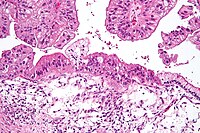
Differential expression of immune related genes in high-grade ovarian serous carcinoma.
Sign Up to like & getrecommendations! Published in 2020 at "Gynecologic oncology"
DOI: 10.1016/j.ygyno.2019.12.019
Abstract: OBJECTIVE To identify novel immunologic targets and biomarkers associated with overall survival (OS) in high-grade serous ovarian cancer (HGSC). METHODS In this retrospective study, microarray data from 51 HGSC specimens were analyzed (Affymetrix HG-U133A). A… read more here.
Keywords: high grade; expression; related genes; hgsc ... See more keywords
Aggressive and recurrent ovarian cancers upregulate ephrinA5, a non-canonical effector of EphA2 signaling duality
Sign Up to like & getrecommendations! Published in 2021 at "Scientific Reports"
DOI: 10.1038/s41598-021-88382-6
Abstract: Erythropoietin producing hepatocellular (Eph) receptors and their membrane-bound ligands ephrins are variably expressed in epithelial cancers, with context-dependent implications to both tumor-promoting and -suppressive processes in ways that remain incompletely understood. Using ovarian cancer tissue… read more here.
Keywords: epha2; aggressive recurrent; ovarian cancers; recurrent ovarian ... See more keywords
A combination of molecular and clinical parameters provides a new strategy for high-grade serous ovarian cancer patient management
Sign Up to like & getrecommendations! Published in 2022 at "Journal of Translational Medicine"
DOI: 10.1136/ijgc-2022-esgo.897
Abstract: Background High-grade serous carcinoma (HGSC) is the most common and deadly subtype of ovarian cancer. Although most patients will initially respond to first-line treatment with a combination of surgery and platinum-based chemotherapy, up to a… read more here.
Keywords: new strategy; hgsc; patient; strategy ... See more keywords
Long-term tumour dormancy in a BRCA1 heterozygote
Sign Up to like & getrecommendations! Published in 2022 at "Journal of Medical Genetics"
DOI: 10.1136/jmedgenet-2021-108269
Abstract: Ovarian highgrade serous carcinoma (HGSC) is thought to mainly arise from the Fallopian tubes from a precursor lesion known as serous tubal intraepithelial carcinoma (STIC). 2 Germline pathogenic variants (GPVs) in BRCA1/2 are the most… read more here.
Keywords: brca1; hgsc; rrso; tumour ... See more keywords
Abstract 3984: NB compound FOXM1 inhibitors have potent anti-cancer activity in high-grade serous ovarian carcinoma
Sign Up to like & getrecommendations! Published in 2023 at "Cancer Research"
DOI: 10.1158/1538-7445.am2023-3984
Abstract: Introduction: High-grade serous ovarian carcinoma (HGSC) is characterized by frequent overexpression and activation of the Forkhead Box M1 (FOXM1) transcription factor, suggesting it as a therapeutic target. This study focused on characterizing the activity of… read more here.
Keywords: compound; hgsc; hgsc cells; foxm1 inhibitors ... See more keywords
Abstract A034: Combination of ATR inhibitor (ATRi) and AKT inhibitor (AKTi) reduces tumor growth and prolongs survival in BRCA2 mutant (BRCA2m) PARP inhibitor (PARPi)-resistant high-grade serous ovarian cancer (HGSC)
Sign Up to like & getrecommendations! Published in 2024 at "Cancer Research"
DOI: 10.1158/1538-7445.ovarian23-a034
Abstract: Background: PARPis are widely used to treat BRCA mutant HGSC. However, acquired resistance to PARPis remains a significant challenge and effective treatment strategies for recurrent HGSC are limited. To address this unmet need, we previously… read more here.
Keywords: parpi resistant; combination; tumor; inhibitor ... See more keywords
Abstract A081: Chromobox 2 (CBX2) drives an immunosuppressive tumor microenvironment in high grade serous carcinoma (HGSC)
Sign Up to like & getrecommendations! Published in 2024 at "Cancer Research"
DOI: 10.1158/1538-7445.ovarian23-a081
Abstract: Introduction: Epigenetic reader and component of Polycomb Repressor Complex 1 (PRC1), Chromobox 2 (CBX2) is expressed in greater than 75% of high-grade serous carcinoma (HGSC) tumors. Increased CBX2 expression conveys a poorer disease-free and overall… read more here.
Keywords: cbx2; time; carcinoma; chromobox cbx2 ... See more keywords
Abstract A069: Epigenetic reprogramming restores STING pathway activation in high-grade serous ovarian cancer
Sign Up to like & getrecommendations! Published in 2025 at "Cancer Research"
DOI: 10.1158/1538-7445.ovarian25-a069
Abstract: High-grade serous ovarian carcinoma (HGSC), which accounts for ∼70% of ovarian carcinoma cases, is typically diagnosed at an advanced stage and carries a poor prognosis. Although immunotherapies can induce durable responses, overall response rates in… read more here.
Keywords: expression; hgsc; cancer; pathway activation ... See more keywords
Abstract B012: Transposable element derived enhancers in ovarian cancer
Sign Up to like & getrecommendations! Published in 2025 at "Cancer Research"
DOI: 10.1158/1538-7445.ovarian25-b012
Abstract: There is global epigenetic dysregulation during transformation from normal to cancerous cells. One of the many consequences of this global epigenetic dysregulation is the reactivation of transposable elements (TEs). TEs comprise roughly half of the… read more here.
Keywords: cancer; derived enhancers; ovarian cancer; gene regulatory ... See more keywords