
Influence of surface characteristics on carbon disulfide catalytic hydrolysis over modified lake sediment biochar and research on deactivated mechanism
Sign Up to like & getrecommendations! Published in 2019 at "Surface and Interface Analysis"
DOI: 10.1002/sia.6696
Abstract: A series of lake sediment biochar (LSB) catalysts modified by metal oxides and basic functional groups were utilized for removal of carbon disulfide (CS2) in yellow phosphorus tail gas. The influences of preparation and modification… read more here.
Keywords: lake sediment; carbon disulfide; lsb; catalytic hydrolysis ... See more keywords

Feasibility of using visible and near-infrared reflectance spectroscopy to monitor heavy metal contaminants in urban lake sediment
Sign Up to like & getrecommendations! Published in 2018 at "Catena"
DOI: 10.1016/j.catena.2017.11.020
Abstract: Abstract Contamination of urban lake sediments by heavy metals is a major threat to environmental safety and human health due to its high toxicity and persistence. This paper aims to examine the feasibility of using… read more here.
Keywords: urban lake; using visible; lake sediment; heavy metals ... See more keywords
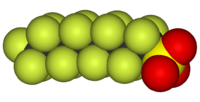
Temporal trends and sediment-water partitioning of per- and polyfluoroalkyl substances (PFAS) in lake sediment.
Sign Up to like & getrecommendations! Published in 2019 at "Chemosphere"
DOI: 10.1016/j.chemosphere.2019.04.074
Abstract: The use of per- and polyfluoroalkyl substances (PFAS) containing aqueous film forming foams (AFFF) at fire training facilities can have an adverse impact on the surrounding environment. The aim of the present study was to… read more here.
Keywords: lake sediment; per polyfluoroalkyl; substances pfas; polyfluoroalkyl substances ... See more keywords

Combined remediation mechanism of bentonite and submerged plants on lake sediments by DGT technique.
Sign Up to like & getrecommendations! Published in 2022 at "Chemosphere"
DOI: 10.1016/j.chemosphere.2022.134236
Abstract: The diffusive gradients in thin films (DGT) technique was applied to determine the mechanism by which bentonite improves the eutrophic lake sediment microenvironment and enhances submerged plant growth. The migration dynamics of N, P, S,… read more here.
Keywords: mechanism bentonite; eutrophic lake; bentonite submerged; lake sediment ... See more keywords

Can the watershed non-point source phosphorus flux amount be reflected by lake sediment?
Sign Up to like & getrecommendations! Published in 2019 at "Ecological Indicators"
DOI: 10.1016/j.ecolind.2019.02.031
Abstract: Abstract An understanding of the quantitative relationship between watershed non-point source (NPS) pollution and lake nutrient enrichment is essential for the environmental management of water bodies. However, a lack of data availability and integration limit… read more here.
Keywords: phosphorus; basin; relationship; lake sediment ... See more keywords

Laboratory and simulation study on the Cd(Ⅱ) adsorption by lake sediment: Mechanism and influencing factors.
Sign Up to like & getrecommendations! Published in 2021 at "Environmental research"
DOI: 10.1016/j.envres.2021.111138
Abstract: Sediments are the major sinks for Cd(Ⅱ) in the aquatic environment. Here, the detailed binding mechanisms and effects of environmental factors on Cd(Ⅱ) adsorption onto lake sediment were tested by a batch of adsorption and… read more here.
Keywords: adsorption lake; laboratory simulation; sediment; lake sediment ... See more keywords

Cadmium immobilization in lake sediment using different crystallographic manganese oxides: Performance and mechanism.
Sign Up to like & getrecommendations! Published in 2022 at "Journal of environmental management"
DOI: 10.1016/j.jenvman.2022.114995
Abstract: Cd pollution in sediments poses severe threats to environmental safety and human health. Mn oxides have potential merit for the remediation of Cd pollution in sediment but have not received enough attention. Although Mn oxides… read more here.
Keywords: performance; spectroscopy; immobilization; immobilization lake ... See more keywords

Marker tephra in Haukadalsvatn lake sediment: A key to the Holocene tephra stratigraphy of northwest Iceland
Sign Up to like & getrecommendations! Published in 2019 at "Quaternary Science Reviews"
DOI: 10.1016/j.quascirev.2019.07.019
Abstract: Abstract Emerging lake sediment records are rapidly improving Iceland‘s Holocene tephra stratigraphy and chronology. Here, we expand upon these recent developments with a securely-dated tephrochronological record from the lake Haukadalsvatn in West Iceland. We capitalize… read more here.
Keywords: northwest iceland; tephra; holocene; stratigraphy ... See more keywords

Bioavailable phosphorus (P) reduction is less than mobile P immobilization in lake sediment for eutrophication control by inactivating agents.
Sign Up to like & getrecommendations! Published in 2017 at "Water research"
DOI: 10.1016/j.watres.2016.11.045
Abstract: Phosphorus (P) immobilization by inactivating agents in the sediment of eutrophic lakes to reduce immediately available P in lake water is often crucial for mitigating nuisance eutrophication symptoms, such as cyanobacterial blooms. Macrophytes and phytoplankton,… read more here.
Keywords: eutrophication control; immobilization; less mobile; lake sediment ... See more keywords
A re-investigation of lake sediment diatoms from the Vestfold Hills, Antarctica, using an updated, fine-grained taxonomy
Sign Up to like & getrecommendations! Published in 2020 at "Diatom Research"
DOI: 10.1080/0269249x.2020.1794982
Abstract: The non-marine diatom flora of the Antarctic continent is currently being revised as recent work within the Maritime and Sub-Antarctic regions has unveiled a number of new endemic species. The under reporting of endemic species… read more here.
Keywords: hills antarctica; updated fine; fine grained; lake sediment ... See more keywords

Halomonas lactosivorans sp. nov., isolated from salt-lake sediment.
Sign Up to like & getrecommendations! Published in 2020 at "International journal of systematic and evolutionary microbiology"
DOI: 10.1099/ijsem.0.004209
Abstract: A bacteria strain, designated CFH 90008T, was isolated from a salt lake sediment sample collected from Yuncheng city, Shanxi Province, PR China. Strain CFH 90008T was Gram-stain-negative, strictly aerobic, motile with lateral flagella and rod-shaped.… read more here.
Keywords: salt lake; cfh 90008t; halomonas lactosivorans; lake sediment ... See more keywords