
Irradiation and parasitism affect the ability of larval hemocytes of Anastrepha obliqua for phagocytosis and the production of reactive oxygen species.
Sign Up to like & getrecommendations! Published in 2022 at "Archives of insect biochemistry and physiology"
DOI: 10.1002/arch.21953
Abstract: The development of the parasitoid Doryctobracon crawfordi (Viereck) (Hymenoptera: Braconidae) in Anastrepha obliqua (McQuart) (Diptera: Tephritidae) larvae is unviable in nature; however, if the host larva is irradiated at 160 Gy, the parasitoid develops and emerges… read more here.
Keywords: reactive oxygen; crawfordi; oxygen species; larvae ... See more keywords
Environmental enrichment decreases anxiety‐like behavior in zebrafish larvae
Sign Up to like & getrecommendations! Published in 2022 at "Developmental Psychobiology"
DOI: 10.1002/dev.22255
Abstract: Abstract The development of anxiety disorders is often linked to individuals’ negative experience. In many animals, development of anxiety‐like behavior is modeled by manipulating individuals’ exposure to environmental enrichment. We investigated whether environmental enrichment during… read more here.
Keywords: anxiety like; environmental enrichment; larvae; like behavior ... See more keywords
Trophic discrimination factor of nitrogen isotopes within amino acids in the dobsonfly Protohermes grandis (Megaloptera: Corydalidae) larvae in a controlled feeding experiment
Sign Up to like & getrecommendations! Published in 2017 at "Ecology and Evolution"
DOI: 10.1002/ece3.2728
Abstract: Abstract The trophic discrimination factor (TDF) of nitrogen isotopes (15N/14N) within amino acids, between a stream‐dwelling dobsonfly larva (Protohermes grandis: Megaloptera; Corydalidae) and its diet (chironomid larvae), was determined in controlled feeding experiments. Last‐instar larvae… read more here.
Keywords: amino acids; trophic discrimination; discrimination factor; within amino ... See more keywords
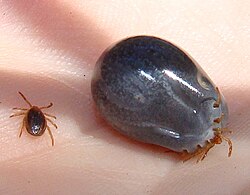
Gut microbial changes in a specialist blister beetle larvae and their nutritional metabolic characteristics
Sign Up to like & getrecommendations! Published in 2024 at "Ecology and Evolution"
DOI: 10.1002/ece3.70184
Abstract: Abstract Insect gut microbiota and their metabolites play a significant role in the shaping of hosts' diets and feeding habits. We conducted 16S rDNA amplicon sequencing on the gut microbiota of specialist blister beetle larvae… read more here.
Keywords: larvae; instar larvae; gut microbial; blister beetle ... See more keywords
Another one bites the plastics
Sign Up to like & getrecommendations! Published in 2022 at "Ecology and Evolution"
DOI: 10.1002/ece3.9332
Abstract: Abstract Old‐growth forests host a rich diversity of invertebrate assemblages. Among them, saproxylic insects play a fundamental role in the nutrient cycle and ecosystem functioning. In these environments, coevolution between insect and plants have reached… read more here.
Keywords: bites plastics; plastic; larvae; cetonid larvae ... See more keywords
Method Validation for the Determination of Ciprofloxacin in Lucilia sericata Larvae via Capillary Electrophoresis Combined With Mass Spectrometry
Sign Up to like & getrecommendations! Published in 2024 at "ELECTROPHORESIS"
DOI: 10.1002/elps.202400118
Abstract: Substances derived from insects can serve therapeutic functions due to their diverse biological properties. This article focuses on the species Lucilia sericata and the benefits of larval therapy in patients who, due to hospitalization, have… read more here.
Keywords: method; larvae; ciprofloxacin; electrophoresis ... See more keywords

Assessing the Toxicity of Individual Aromatic Compounds and Mixtures to American Lobster (Homarus americanus) Larvae Using a Passive Dosing System
Sign Up to like & getrecommendations! Published in 2021 at "Environmental Toxicology and Chemistry"
DOI: 10.1002/etc.4988
Abstract: Abstract Aquatic exposures to aromatic compounds (ACs) may be important contributors to biological effects of oil spills. The present study examined the acute toxicity of 11 ACs and 3 binary AC mixtures on stage 1… read more here.
Keywords: chemistry; toxicity; larvae; american lobster ... See more keywords
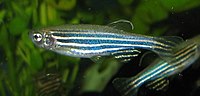
Behavioural effects of early‐life exposure to parabens in zebrafish larvae
Sign Up to like & getrecommendations! Published in 2021 at "Journal of Applied Toxicology"
DOI: 10.1002/jat.4171
Abstract: Parabens are classified as endocrine disrupting chemicals due to their ability to activate several nuclear receptors causing changes in hormones‐dependent signalling pathways. Central nervous system of developing organisms is particularly vulnerable to changes in hormonal… read more here.
Keywords: zebrafish larvae; life; larvae; exposure parabens ... See more keywords
Exposure to thiourea during the early stages of development impedes the formation of the swim bladder in zebrafish larvae
Sign Up to like & getrecommendations! Published in 2024 at "Journal of Applied Toxicology"
DOI: 10.1002/jat.4657
Abstract: Thiourea, a widely used agrochemical, is known to inhibit the activity of thyroid peroxidase, a key enzyme in the biosynthetic pathway of thyroid hormones. Thyroid insufficiency compromises the basal metabolic rate in warm‐blooded organisms and… read more here.
Keywords: larvae; bladder; development; exposure thiourea ... See more keywords
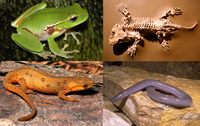
Development of the digestive system of Argentine hake, Merluccius hubbsi, larvae
Sign Up to like & getrecommendations! Published in 2020 at "Journal of Morphology"
DOI: 10.1002/jmor.21122
Abstract: The Argentine hake Merluccius hubbsi is an important fishery resource of the Southwestern Atlantic Ocean and it is also a potential species for cultivation. In this work, the digestive system development in field‐caught hake larvae… read more here.
Keywords: argentine hake; system; digestive system; larvae ... See more keywords
Anisakis simplex (s.l.) resistance to the action of gastric enzymes depends upon previous treatments applied to infected fish mince and affects antigen release.
Sign Up to like & getrecommendations! Published in 2020 at "Journal of the science of food and agriculture"
DOI: 10.1002/jsfa.11031
Abstract: BACKGROUND Freezing is considered the most suitable technological treatment to avoid Anisakis infection from eating raw or undercooked fish but modifications of their cuticle upon freezing may reduce their resistance to gastric fluids, provoking a… read more here.
Keywords: mince; fish mince; resistance; larvae ... See more keywords