
Monascin & Ankaflavin - Biosynthesis from Monascus purpureus, production methods, pharmacological properties: A review.
Sign Up to like & getrecommendations! Published in 2022 at "Biotechnology and applied biochemistry"
DOI: 10.1002/bab.2336
Abstract: Monascus purpureus species yield beneficial secondary metabolites copiously including Monascus pigments which are broadly used as food additives, as a nitrite substitute in meat products, and as a colorant in the food industry. Monascus yellow… read more here.
Keywords: biosynthesis monascus; monascus; monascin ankaflavin; monascus purpureus ... See more keywords
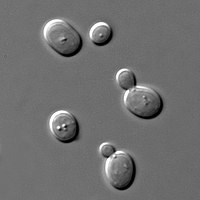
Promotion of Monacolin K production in Monascus extractive fermentation: the variation in fungal morphology and in the expression levels of biosynthetic gene clusters.
Sign Up to like & getrecommendations! Published in 2021 at "Journal of the science of food and agriculture"
DOI: 10.1002/jsfa.11218
Abstract: BACKGROUND Monacolin K, an important secondary metabolite of Monascus, possesses a cholesterol-lowering effect, and is widely used in the manufacture of antihypertensive drugs. In this study, we constructed an extractive fermentation system by adding nonionic… read more here.
Keywords: fermentation; morphology; monascus; expression levels ... See more keywords
Supplementary effect of whey components on the monascin productivity of Monascus sp.
Sign Up to like & getrecommendations! Published in 2023 at "Journal of the science of food and agriculture"
DOI: 10.1002/jsfa.12483
Abstract: BACKGROUND Monascus sp. has been used for fermented foods for centuries. It can synthesize yellow, red and orange pigments as secondary metabolites. Here, we focused on yellow pigment monascin, responsible for anti-inflammation and antidiabetic effects,… read more here.
Keywords: monascin production; monascus; whey; production ... See more keywords
The effects of environmental factors on the synthesis of water-soluble Monascus red pigments via submerged fermentation: a review.
Sign Up to like & getrecommendations! Published in 2024 at "Journal of the science of food and agriculture"
DOI: 10.1002/jsfa.13517
Abstract: Monascus pigments (MPs) have been used as natural food pigments for many years. There is a high demand for Monascus red pigments (MRPs) to enhance color and for antibacterial and cancer-prevention therapies in food and… read more here.
Keywords: monascus; environmental factors; water; water soluble ... See more keywords

Comparative analysis of genetic polymorphisms among Monascus strains by ISSR and RAPD markers.
Sign Up to like & getrecommendations! Published in 2017 at "Journal of the science of food and agriculture"
DOI: 10.1002/jsfa.7780
Abstract: BACKGROUND The genus Monascus includes several species of fungi valued across Asia for their culinary uses and diverse medicinal properties. In this study, we evaluated the applicability of random amplified polymorphic DNA (RAPD) and inter-simple… read more here.
Keywords: comparative analysis; analysis genetic; analysis; rapd markers ... See more keywords
Linoleic acid functions as a quorum‐sensing molecule in Monascus purpureus–Saccharomyces cerevisiae co‐culture
Sign Up to like & getrecommendations! Published in 2022 at "Yeast"
DOI: 10.1002/yea.3831
Abstract: When Monascus purpureus was co‐cultured with Saccharomyces cerevisiae, we noted significant changes in the secondary metabolism and morphological development of Monascus. In yeast co‐culture, although the pH was not different from that of a control,… read more here.
Keywords: culture; linoleic acid; purpureus; monascus ... See more keywords
Production of Monascus pigments as extracellular crystals by cell suspension culture
Sign Up to like & getrecommendations! Published in 2017 at "Applied Microbiology and Biotechnology"
DOI: 10.1007/s00253-017-8646-1
Abstract: It is generally accepted that Monascus pigments are predominantly cell-bound, including both intracellular and surface-bound pigments. This long-term misconception was corrected in the present work. Production of extracellular crystal pigments by submerged culture of Monascus… read more here.
Keywords: suspension culture; monascus pigments; cell suspension; monascus ... See more keywords

Inducing red pigment and inhibiting citrinin production by adding lanthanum(III) ion in Monascus purpureus fermentation.
Sign Up to like & getrecommendations! Published in 2021 at "Applied microbiology and biotechnology"
DOI: 10.1007/s00253-021-11162-9
Abstract: Monascus pigments (MPs) are widely used natural colorants in Asian countries. The problems of low extracellular red pigment (ERP) and high citrinin remain to be solved in Monascus pigment production. The effect of lanthanum(III) ion… read more here.
Keywords: purpureus fermentation; production; monascus; red pigment ... See more keywords
Screening Antibacterial Photodynamic Effect of Monascus Red Yeast Rice (Hong-Qu) and Mycelium Extracts
Sign Up to like & getrecommendations! Published in 2024 at "Current Microbiology"
DOI: 10.1007/s00284-024-03725-6
Abstract: The fungus Monascus is a well-known source of secondary metabolites with interesting pharmaceutical and nutraceutical applications. In particular, Monascus pigments possess a wide range of biological activities (e.g. antimicrobial, antioxidant, anti-inflammatory or antitumoral). To broaden… read more here.
Keywords: effect; monascus; antibacterial photodynamic; screening antibacterial ... See more keywords
A New Pyrrole Compound from Monascus ruber
Sign Up to like & getrecommendations! Published in 2019 at "Chemistry of Natural Compounds"
DOI: 10.1007/s10600-019-02903-4
Abstract: Phytochemical investigation of the fungus Monascus ruber led to the isolation of one new alkaloid derivative, namely ruberpyrrole (1). The structures were established by extensive spectroscopic characterization and the reported data. read more here.
Keywords: compound monascus; new pyrrole; chemistry; monascus ... See more keywords
Highly efficient improvement of Monascus pigment production by accelerating starch hydrolysis in Monascus ruber CICC41233
Sign Up to like & getrecommendations! Published in 2018 at "3 Biotech"
DOI: 10.1007/s13205-018-1359-z
Abstract: To investigate the relationship between starch hydrolysis and Monascus pigments (MPs) production, the α-amylase gene (AOamyA) from Aspergillus oryzae was heterologously expressed in Monascus ruber CICC41233, and we obtained a positive transformant named Monascus ruber… read more here.
Keywords: production; ruber cicc41233; starch hydrolysis; monascus ... See more keywords