
lncRNA GAS5 suppresses rheumatoid arthritis by inhibiting miR-361-5p and increasing PDK4.
Sign Up to like & getrecommendations! Published in 2021 at "Biochemical and biophysical research communications"
DOI: 10.1016/j.bbrc.2021.10.040
Abstract: Rheumatoid arthritis (RA) is an inflammatory disease that causes hyperplasia of synovial tissue and cartilage destruction. This research was to investigate the effects of lncRNA GAS5/miR-361-5p/PDK4 on rheumatoid arthritis. By qRT-PCR, GAS5 and PDK4 were… read more here.
Keywords: lncrna gas5; pdk4; rheumatoid arthritis; mir 361 ... See more keywords
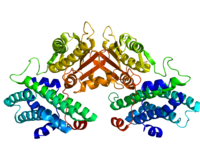
N6-methyladenosine regulates glycolysis of cancer cells through PDK4
Sign Up to like & getrecommendations! Published in 2020 at "Nature Communications"
DOI: 10.1038/s41467-020-16306-5
Abstract: Studies on biological functions of N6-methyladenosine (m6A) modification in mRNA have sprung up in recent years. We find m6A can positively regulate the glycolysis of cancer cells. Specifically, m6A-sequencing and functional studies confirm that pyruvate… read more here.
Keywords: pdk4; regulates glycolysis; cancer cells; cancer ... See more keywords
Extracellular matrix-driven metabolic control of pancreatic endocrine lineage allocation
Sign Up to like & getrecommendations! Published in 2025 at "EMBO Reports"
DOI: 10.1038/s44319-025-00610-6
Abstract: The mechanical and metabolic states of progenitor and stem cells are emerging as key regulators of cell fate decisions. Lineage specification of pancreatic endocrine cells is promoted by reduced mechanical tension in vitro, but the… read more here.
Keywords: endocrine fate; extracellular matrix; pdk4; specification ... See more keywords
Noncanonical PDK4 action alters mitochondrial dynamics to affect the cellular respiratory status
Sign Up to like & getrecommendations! Published in 2022 at "Proceedings of the National Academy of Sciences of the United States of America"
DOI: 10.1073/pnas.2120157119
Abstract: Significance Sustained energy stress and cellular dysfunction can cause excessive mitochondrial fragmentation, a feature observed in metabolic diseases, cancer, cardiovascular and neurological disorders, as well as in diseases associated with mitochondrial DNA mutations. We now… read more here.
Keywords: mitochondrial dynamics; respiratory status; pdk4; cellular respiratory ... See more keywords
PDK4 suppresses high glucose-induced microglial ferroptosis by restricting pro-ferroptotic PUFA biosynthesis.
Sign Up to like & getrecommendations! Published in 2025 at "Neuroreport"
DOI: 10.1097/wnr.0000000000002234
Abstract: BACKGROUND Diabetes significantly elevates the risk of neurodegenerative disorders, including Alzheimer's disease and Parkinson's disease, indicating shared pathophysiological mechanisms. While ferroptosis is increasingly implicated in neurodegeneration, microglia - highly vulnerable to ferroptosis - may mediate… read more here.
Keywords: high glucose; induced microglial; microglial ferroptosis; ferroptosis ... See more keywords
lncRNA MEG3 Promotes PDK4/GSK-3β/β-Catenin Axis in MEFs by Targeting miR-532-5p
Sign Up to like & getrecommendations! Published in 2023 at "Oxidative Medicine and Cellular Longevity"
DOI: 10.1155/2023/3563663
Abstract: Studies reported the positive and negative osteogenic effects of MEG3 in mesenchymal stem cells (MSCs). This study aims at clarifying the osteogenic potential of MEG3 and the underlying mechanism. Bone morphogenetic protein 9- (BMP9-) transfected… read more here.
Keywords: gsk catenin; meg3; pdk4; mir 532 ... See more keywords
Abstract 361: PDK4 is dispensable for PDAC chachexia
Sign Up to like & getrecommendations! Published in 2023 at "Cancer Research"
DOI: 10.1158/1538-7445.am2023-361
Abstract: Cachexia is an involuntary weight loss and muscle wasting that affects up to 80% of advanced cancer patients. It is an independent prognostic marker for response to treatment and overall survival and accounts for 20%… read more here.
Keywords: pdk4; muscle; pdk4 dispensable; pdac ... See more keywords
Abstract Tu0001: Pyruvate Dehydrogenase Kinase 4 Contributes To Abdominal Aortic Aneurysm Pathogenesis By Accelerating Smooth Muscle Cell Metabolic Reprogramming And NLRP3 Inflammasome-dependent Pyroptosis
Sign Up to like & getrecommendations! Published in 2025 at "Arteriosclerosis, Thrombosis, and Vascular Biology"
DOI: 10.1161/atv.45.suppl_1.tu0001
Abstract: Background: Abdominal aortic aneurysm (AAA) is a severe aortic disease, with a significantly high mortality rate if ruptured. Understanding the molecular mechanisms underlying disease progression is crucial to optimize therapeutic strategies. Pyruvate dehydrogenase kinase 4… read more here.
Keywords: metabolic reprogramming; pyroptosis; abdominal aortic; nlrp3 inflammasome ... See more keywords
Myocardial pyruvate dehydrogenase kinase 4 drives sex-specific cardiac responses to endotoxemia
Sign Up to like & getrecommendations! Published in 2025 at "JCI Insight"
DOI: 10.1172/jci.insight.191649
Abstract: Males often experience worse cardiac outcomes than females in sepsis. This study identified pyruvate dehydrogenase kinase 4 (PDK4) as a key mediator of this disparity. PDK4 regulates glucose utilization by inhibiting pyruvate dehydrogenase (PDH) in… read more here.
Keywords: dehydrogenase kinase; sex specific; pyruvate dehydrogenase; pdk4 ... See more keywords
Ginsenoside Rh2 shifts tumor metabolism from aerobic glycolysis to oxidative phosphorylation through regulating the HIF1-α/PDK4 axis in non-small cell lung cancer
Sign Up to like & getrecommendations! Published in 2024 at "Molecular Medicine"
DOI: 10.1186/s10020-024-00813-y
Abstract: Ginsenoside Rh2 (G-Rh2), a steroidal compound extracted from roots of ginseng, has been extensively studied in tumor therapy. However, its specific regulatory mechanism in non-small cell lung cancer (NSCLC) is not well understood. Pyruvate dehydrogenase… read more here.
Keywords: aerobic glycolysis; ginsenoside rh2; rh2; tumor ... See more keywords
Difference in pyruvic acid metabolism between neonatal and adult mouse lungs exposed to hyperoxia
Sign Up to like & getrecommendations! Published in 2020 at "PLoS ONE"
DOI: 10.1371/journal.pone.0238604
Abstract: Objective Neonatal lungs are more tolerant to hyperoxic injury than are adult lungs. This study investigated differences in the response to hyperoxic exposure between neonatal and adult mouse lungs using metabolomics analysis with capillary electrophoresis… read more here.
Keywords: adult; pdk4; adult mouse; adult mice ... See more keywords