
PPM1D activity promotes the replication stress caused by cyclin E1 overexpression.
Sign Up to like & getrecommendations! Published in 2023 at "Molecular oncology"
DOI: 10.1002/1878-0261.13433
Abstract: Oncogene-induced replication stress has been recognized as a major cause of genome instability in cancer cells. Increased expression of cyclin E1 caused by amplification of the CCNE1 gene is a common cause of replication stress… read more here.
Keywords: replication; overexpression; ppm1d; activity ... See more keywords
Pharmacological degradation of ATR induces antiproliferative DNA replication stress in leukemic cells
Sign Up to like & getrecommendations! Published in 2024 at "Molecular Oncology"
DOI: 10.1002/1878-0261.13638
Abstract: Mammalian cells replicate ~ 3 × 10⁹ base pairs per cell cycle. One of the key molecules that slows down the cell cycle and prevents excessive DNA damage upon DNA replication stress is the checkpoint kinase ataxia‐telangiectasia‐and‐RAD3‐related (ATR).… read more here.
Keywords: replication stress; dna replication; atr; leukemic cells ... See more keywords
Rad53 arrests leading and lagging strand DNA synthesis via distinct mechanisms in response to DNA replication stress
Sign Up to like & getrecommendations! Published in 2022 at "BioEssays"
DOI: 10.1002/bies.202200061
Abstract: DNA replication stress threatens ordinary DNA synthesis. The evolutionarily conserved DNA replication stress response pathway involves sensor kinase Mec1/ATR, adaptor protein Mrc1/Claspin, and effector kinase Rad53/Chk1, which spurs a host of changes to stabilize replication… read more here.
Keywords: replication stress; dna synthesis; replication; dna ... See more keywords

Biomarkers of genome instability in normal mammalian genomes following drug‐induced replication stress
Sign Up to like & getrecommendations! Published in 2020 at "Environmental and Molecular Mutagenesis"
DOI: 10.1002/em.22364
Abstract: Genome instability is a hallmark of most human cancers and is exacerbated following replication stress. However, the effects that drugs/xenobiotics have in promoting genome instability including chromosomal structural rearrangements in normal cells are not currently… read more here.
Keywords: drug induced; toxicology; genome instability; replication stress ... See more keywords
Replication stress: an early key event in ochratoxin a genotoxicity?
Sign Up to like & getrecommendations! Published in 2025 at "Archives of Toxicology"
DOI: 10.1007/s00204-025-04004-4
Abstract: Ochratoxin A (OTA), a widespread food contaminant and potent renal carcinogen in rodents, is weakly genotoxic in mammalian cells. The mechanisms underlying OTA-induced genetic damage are still poorly understood. In its recent risk assessment, the… read more here.
Keywords: ota; replication; replication stress; damage ... See more keywords
Claspin: From replication stress and DNA damage responses to cancer therapy.
Sign Up to like & getrecommendations! Published in 2019 at "Advances in protein chemistry and structural biology"
DOI: 10.1016/bs.apcsb.2018.10.007
Abstract: Cancer is still one of the major causes of death worldwide. Radiation therapy and chemotherapy remain the main treatment modalities in cancer. These therapies exert their effect mainly through interference with DNA replication and induction… read more here.
Keywords: cancer; dna damage; replication stress;

Wss1 Promotes Replication Stress Tolerance by Degrading Histones.
Sign Up to like & getrecommendations! Published in 2020 at "Cell reports"
DOI: 10.1016/j.celrep.2020.02.018
Abstract: Timely completion of DNA replication is central to accurate cell division and to the maintenance of genomic stability. However, certain DNA-protein interactions can physically impede DNA replication fork progression. Cells remove or bypass these physical… read more here.
Keywords: dna; tolerance; dna protein; replication stress ... See more keywords

Common Fragile Sites Are Characterized by Faulty Condensin Loading after Replication Stress
Sign Up to like & getrecommendations! Published in 2020 at "Cell Reports"
DOI: 10.1016/j.celrep.2020.108177
Abstract: Summary Cells coordinate interphase-to-mitosis transition, but recurrent cytogenetic lesions appear at common fragile sites (CFSs), termed CFS expression, in a tissue-specific manner after replication stress, marking regions of instability in cancer. Despite such a distinct… read more here.
Keywords: common fragile; replication; replication stress; condensin loading ... See more keywords

A FOXO-dependent replication checkpoint restricts proliferation of damaged cells.
Sign Up to like & getrecommendations! Published in 2021 at "Cell reports"
DOI: 10.1016/j.celrep.2020.108675
Abstract: DNA replication is challenged by numerous exogenous and endogenous factors that can interfere with the progression of replication forks. Substantial accumulation of single-stranded DNA during DNA replication activates the DNA replication stress checkpoint response that… read more here.
Keywords: replication; restricts proliferation; replication stress; checkpoint ... See more keywords
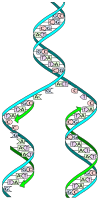
PCNA, a focus on replication stress and the alternative lengthening of telomeres pathway.
Sign Up to like & getrecommendations! Published in 2021 at "DNA repair"
DOI: 10.1016/j.dnarep.2021.103055
Abstract: The maintenance of telomeres, which are specialized stretches of DNA found at the ends of linear chromosomes, is a crucial step for the immortalization of cancer cells. Approximately 10-15 % of cancer cells use a… read more here.
Keywords: dna; alternative lengthening; replication stress; replication ... See more keywords

USP13 regulates the replication stress response by deubiquitinating TopBP1.
Sign Up to like & getrecommendations! Published in 2021 at "DNA repair"
DOI: 10.1016/j.dnarep.2021.103063
Abstract: The DNA replication stress-induced checkpoint activated through the TopBP1-ATR axis is important for maintaining genomic stability. However, the regulation of TopBP1 in DNA-damage responses remains unclear. In this study, we identify the deubiquitinating enzyme (DUB)… read more here.
Keywords: topbp1; stress response; replication stress;