
Identification and phylogenetic analysis of a tobamovirus causing hibiscus (Hibiscus rosa-sinensis L.) mosaic disease in Iran
Sign Up to like & getrecommendations! Published in 2020 at "Journal of Plant Pathology"
DOI: 10.1007/s42161-020-00510-9
Abstract: Hibiscus (Hibiscus rosa-sinensis L.) is a tropical perennial shrub frequently cultivated as an ornamental plant in southwest Iran. Virus-like symptoms including leaf mosaic, mottling and malformation have been observed on hibiscus plants during 2015–2017. Infectivity… read more here.
Keywords: hibiscus; hibiscus hibiscus; rosa sinensis; mosaic ... See more keywords
Neuroprotective effects of quercetin 3-O-sophoroside from Hibiscus rosa-sinensis Linn. on scopolamine-induced amnesia in mice
Sign Up to like & getrecommendations! Published in 2020 at "Journal of Functional Foods"
DOI: 10.1016/j.jff.2020.104291
Abstract: Abstract Quercetin 3-O-sophoroside (Q3OS) was isolated and identified from Hibiscus rosa-sinensis Linn. (HRS) for the first time. Although Q3OS is common glycosides, its therapeutic potential and mechanism of action against Alzheimer’s disease (AD) have rarely… read more here.
Keywords: neuroprotective effects; quercetin sophoroside; rosa sinensis; sinensis linn ... See more keywords
Effects of 4-CPPU on in vitro multiplication and sustainable generation of Hibiscus rosa-sinensis L. ‘White Butterfly’
Sign Up to like & getrecommendations! Published in 2020 at "Saudi Journal of Biological Sciences"
DOI: 10.1016/j.sjbs.2019.11.002
Abstract: There are more than nine thousand cultivars of Hibiscus rosa-sinensis L., with a series of flowers with shapes, colors and new cultivars continues as generated through both traditional and modern breeding techniques. In this study,… read more here.
Keywords: white butterfly; sinensis; effects cppu; rosa sinensis ... See more keywords
Chloroplast genome of Hibiscus rosa-sinensis (Malvaceae): Comparative analyses and identification of mutational hotspots.
Sign Up to like & getrecommendations! Published in 2019 at "Genomics"
DOI: 10.1016/j.ygeno.2019.04.010
Abstract: Previous studies to resolve phylogenetic and taxonomic discrepancies of Hibiscus remained inconclusive. Here, we report chloroplast genome sequence of Hibiscus rosa-sinensis. Hibiscus rosa-sinensis chloroplast genome was 160,951 bp, comprising of large single copy (89,509 bp) and small… read more here.
Keywords: hibiscus; rosa sinensis; comparative analyses; chloroplast genome ... See more keywords
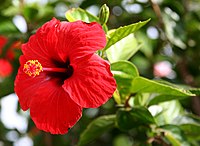
Growth-Inhibiting, Bactericidal, Antibiofilm, and Urease Inhibitory Activities of Hibiscus rosa sinensis L. Flower Constituents toward Antibiotic Sensitive- and Resistant-Strains of Helicobacter pylori
Sign Up to like & getrecommendations! Published in 2020 at "ACS Omega"
DOI: 10.1021/acsomega.0c01640
Abstract: The aim of the present study was to assess antimicrobial effects of naringenin (NRG), luteolin (LUT), myricetin (MCT), and protocatechuic acid (PCA) identified in a Hibiscus rosa sinensis flower against two reference strains and five… read more here.
Keywords: mct; rosa sinensis; sinensis flower; hibiscus rosa ... See more keywords
l-Cysteine-Modified Carbon Dots Derived from Hibiscus rosa-sinensis for Thiram Pesticides Identification on Edible Perilla Leaves
Sign Up to like & getrecommendations! Published in 2024 at "ACS Omega"
DOI: 10.1021/acsomega.4c07090
Abstract: In this work, environmentally friendly fluorescent carbon dots (C-dots) were developed for the purpose of thiram identification in the leaves of perilla plants. Powdered plant petals from Hibiscus rosa-sinensis were hydrothermally combined to create C-dots.… read more here.
Keywords: spectroscopy; carbon; carbon dots; rosa sinensis ... See more keywords
Chemical characterization of hibiscus rosa-sinensis plant fibers facilitated through design of experiments and artificial neural network hybrid approach
Sign Up to like & getrecommendations! Published in 2024 at "Scientific Reports"
DOI: 10.1038/s41598-024-73503-8
Abstract: The integration of natural fibers into Fiber Reinforced Polymers (FRPs) has emerged as a promising avenue for sustainable and high-performance composite materials. Natural fibers, derived from plants, offer notable advantages such as renewability, low cost,… read more here.
Keywords: plant; rosa sinensis; artificial neural; hibiscus rosa ... See more keywords
Dyeing wool and cotton fibres with acidic extract of Hibiscus rosa sinensis flower
Sign Up to like & getrecommendations! Published in 2019 at "Natural Product Research"
DOI: 10.1080/14786419.2016.1180598
Abstract: Abstract The focus of this work is to extract a natural dye for colouring camel wool as a substitute for synthetic dyes used in the Sadu House of Kuwait. Their target is to keep the… read more here.
Keywords: dyeing wool; hibiscus rosa; rosa sinensis;
First Report of Pseudomonas amygdali Causing Leaf Spot on Hibiscus rosa-sinensis in a greenhouse in New York State, U.S.A.
Sign Up to like & getrecommendations! Published in 2025 at "Plant disease"
DOI: 10.1094/pdis-07-24-1556-pdn
Abstract: Hibiscus rosa-sinensis, commonly known as the "Chinese hibiscus", is a widely cultivated shrub with ornamental and medicinal applications (Jadhav et al., 2009). However, it is known to be susceptible to a range of pathogens including… read more here.
Keywords: new york; rosa sinensis; culture; hibiscus rosa ... See more keywords
Color, Antioxidant Capacity and Flavonoid Composition in Hibiscus rosa-sinensis Cultivars
Sign Up to like & getrecommendations! Published in 2023 at "Molecules"
DOI: 10.3390/molecules28041779
Abstract: Hibiscus rosa-sinensis plants are mainly cultivated as ornamental plants, but they also have food and medicinal uses. In this work, 16 H. rosa-sinensis cultivars were studied to measure their colorimetric parameters and the chemical composition… read more here.
Keywords: hibiscus rosa; concentration; sinensis cultivars; rosa sinensis ... See more keywords
Photocatalytic and Antibacterial Activity of CoFe2O4 Nanoparticles from Hibiscus rosa-sinensis Plant Extract
Sign Up to like & getrecommendations! Published in 2022 at "Nanomaterials"
DOI: 10.3390/nano12203668
Abstract: Biogenic CoFe2O4 nanoparticles were prepared by co-precipitation and Hibiscus rosa sinensis plant leaf was used as a bio-reductant of the nanoparticle productions. The biosynthesized CoFe2O4 nanoparticles were characterized by XRD, FTIR, UV, VSM, and SEM… read more here.
Keywords: hibiscus rosa; sinensis plant; rosa sinensis; cofe2o4 ... See more keywords