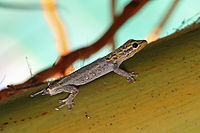
Biomimetic fracture model of lizard tail autotomy
Sign Up to like & getrecommendations! Published in 2022 at "Science"
DOI: 10.1126/science.abh1614
Abstract: Lizard tail autotomy is an antipredator strategy consisting of sturdy attachment at regular times but quick detachment during need. We propose a biomimetic fracture model of lizard tail autotomy using multiscale hierarchical structures. The structures… read more here.
Keywords: lizard tail; model; fracture; tail ... See more keywords

Neuromuscular control of locomotion is altered by tail autotomy in geckos
Sign Up to like & getrecommendations! Published in 2018 at "Journal of Experimental Biology"
DOI: 10.1242/jeb.179564
Abstract: ABSTRACT Animal locomotion is driven by underlying axial and appendicular musculature. In order for locomotion to be effective, these muscles must be able to rapidly respond to changes in environmental and physiological demands. Although virtually… read more here.
Keywords: neuromuscular control; locomotion; control locomotion; tail autotomy ... See more keywords