
The microbiology of rebuilding soils with water treatment residual co-amendments: Risks and benefits.
Sign Up to like & getrecommendations! Published in 2021 at "Journal of environmental quality"
DOI: 10.1002/jeq2.20286
Abstract: Water treatment residuals (WTR) are sludges from the potable water treatment process, currently largely destined for landfill. This waste can be diverted to rebuild degraded soils, aligning with the UN's Sustainable Development Goals 12 (Consumption… read more here.
Keywords: water treatment; microbiology; risks benefits; wtr ... See more keywords

Improving crop growing conditions with water treatment residual and compost co-amendments: Soil-water dynamics.
Sign Up to like & getrecommendations! Published in 2024 at "Journal of environmental quality"
DOI: 10.1002/jeq2.20541
Abstract: Land application of water treatment residual (WTR) in combination with phosphate-rich organic wastes, like compost or sewage sludge, in nutrient-poor soils was previously shown to promote crop growth. This WTR diversion from landfill to agriculture… read more here.
Keywords: water dynamics; compost; water treatment; water ... See more keywords
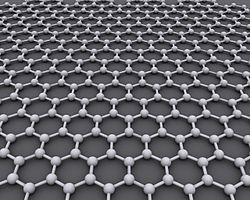
Graphene Applications in Composites, Energy, and Water Treatment
Sign Up to like & getrecommendations! Published in 2025 at "Macromolecular Materials and Engineering"
DOI: 10.1002/mame.202400316
Abstract: Graphene, the 2D material and the basic building block of the sp2 carbon family has received enormous attention from research and industrial communities due to its remarkable properties. Graphene's potential to be implemented is limitless… read more here.
Keywords: graphene; composites energy; water treatment; water ... See more keywords
An experimental laboratory reactor for quantitative kinetic studies of disinfection byproduct formation using membrane inlet mass spectrometry
Sign Up to like & getrecommendations! Published in 2022 at "Rapid Communications in Mass Spectrometry"
DOI: 10.1002/rcm.9339
Abstract: Rationale The type and quantity of environmentally problematic disinfection byproducts (DBPs) produced during chlorination of water depend on the natural organic matter and organic contaminants that raw water contains, and on the operational conditions of… read more here.
Keywords: reactor; water; water treatment; membrane inlet ... See more keywords
Visible-Light Induced Sustainable Water Treatment Using Plasmo-Semiconductor Nanogap Bridge Array, PNA.
Sign Up to like & getrecommendations! Published in 2021 at "Small"
DOI: 10.1002/smll.202006044
Abstract: The development of sustainable methods for energy-intensive water treatment processes continues to be a challenging issue. Plasmonic-semiconductor nanoparticles, which absorb large amounts of sunlight in the visible range for conversion into chemical energy efficiently, can… read more here.
Keywords: light induced; water; water treatment; semiconductor ... See more keywords
Macroscopic MOF Architectures: Effective Strategies for Practical Application in Water Treatment.
Sign Up to like & getrecommendations! Published in 2021 at "Small"
DOI: 10.1002/smll.202104387
Abstract: Metal-organic frameworks (MOFs) have potential applications in removing pollutants such as heavy metals, oils, and toxins from water. However, due to the intrinsic fragility of MOFs and their fine powder form, there are still technical… read more here.
Keywords: water treatment; water; macroscopic; practical application ... See more keywords
Ships’ Ballast Water Treatment by Chlorination Can Generate Toxic Trihalomethanes
Sign Up to like & getrecommendations! Published in 2017 at "Bulletin of Environmental Contamination and Toxicology"
DOI: 10.1007/s00128-017-2125-3
Abstract: The International Maritime Organization (IMO) will enforce a new abundance-based performance standard for ballast water in September, 2017. Strong oxidants, like chlorine, have been proposed as a method for achieving this standard. However chlorine treatment… read more here.
Keywords: ballast water; water; water treatment; ships ballast ... See more keywords
Occurrence and fate of PPCPs in typical drinking water treatment plants in China
Sign Up to like & getrecommendations! Published in 2018 at "Environmental Geochemistry and Health"
DOI: 10.1007/s10653-018-0181-1
Abstract: In this study, the occurrence and removal of twenty-nine pharmaceuticals and personal care products (PPCPs) in two water treatment plants (WTPs) in China were investigated. WTP1 employed ozonation and granular active carbon (GAC) filtration after… read more here.
Keywords: coagulation; water treatment; treatment; treatment plants ... See more keywords
Sludge quantification at water treatment plant and its management scenario
Sign Up to like & getrecommendations! Published in 2017 at "Environmental Monitoring and Assessment"
DOI: 10.1007/s10661-017-6166-1
Abstract: Large volume of sludge is generated at the water treatment plants during the purification of surface water for potable supplies. Handling and disposal of sludge require careful attention from civic bodies, plant operators, and environmentalists.… read more here.
Keywords: sludge; water; water treatment; treatment plant ... See more keywords

Performance comparison of three methods for detection of Giardia spp. cysts and Cryptosporidium spp. oocysts in drinking-water treatment sludge
Sign Up to like & getrecommendations! Published in 2018 at "Environmental Monitoring and Assessment"
DOI: 10.1007/s10661-018-7057-9
Abstract: Detecting pathogenic protozoa in drinking-water treatment sludge is a challenge as existing methods are complex, and unfortunately, there are no specific technical standards to follow. Selecting an efficient analytical method is imperative in developing countries,… read more here.
Keywords: three methods; water; water treatment; treatment sludge ... See more keywords
Assessment of poly(diallyl dimethyl ammonium chloride) and lime for surface water treatment (pond, river, and canal water): seasonal variations and correlation analyses
Sign Up to like & getrecommendations! Published in 2024 at "Environmental Monitoring and Assessment"
DOI: 10.1007/s10661-024-13004-3
Abstract: The present study deals with the assessment of different physicochemical parameters (pH, electrical conductivity (E.C.), turbidity, total dissolved solids (TDS), and dissolved oxygen) in different surface water such as pond, river, and canal water in… read more here.
Keywords: turbidity; water; water treatment; surface water ... See more keywords